

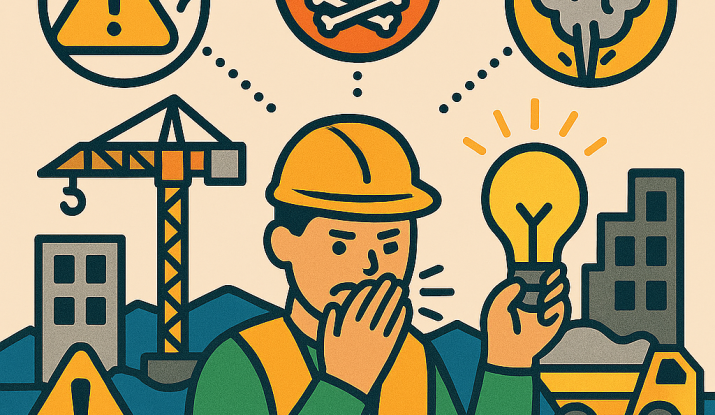
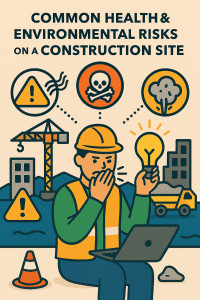
🛠️ Common Health & Environmental Risks on Construction Sites — And How to Tackle Them
Construction sites are dynamic environments where progress and risk go hand in hand. While the industry builds the future, it also faces serious health and environmental challenges that can impact workers, communities, and ecosystems. Understanding these risks is the first step toward creating safer, more sustainable job sites.
Let’s break down the most common threats—and how to manage them effectively.
☣️ 1. Exposure to Hazardous Substances
The Risk: Construction workers often come into contact with chemicals like asbestos, silica dust, lead, solvents, and diesel fumes. Long-term exposure can lead to respiratory diseases, skin conditions, and even cancer.
Mitigation Strategies:
- Use PPE (Personal Protective Equipment) like masks and gloves.
- Train workers on handling hazardous materials.
- Implement dust suppression techniques and proper ventilation.
🌬️ 2. Air and Noise Pollution
The Risk: Heavy machinery, demolition, and welding can release pollutants and generate high noise levels, affecting both workers and nearby residents.
Mitigation Strategies:
- Schedule noisy operations during less disruptive hours.
- Use sound barriers and low-emission equipment.
- Monitor air quality and provide hearing protection.
🌡️ 3. Heat Stress and Dehydration
The Risk: In hot climates or during peak seasons, prolonged exposure to heat can cause fatigue, heatstroke, and dehydration.
Mitigation Strategies:
- Provide shaded rest areas and hydration stations.
- Rotate shifts to avoid peak heat hours.
- Educate workers on recognizing symptoms of heat-related illness.
🦠 4. Poor Sanitation and Hygiene
The Risk: Lack of clean water, toilets, and waste disposal can lead to infections, gastrointestinal issues, and disease outbreaks.
Mitigation Strategies:
- Ensure access to clean drinking water and handwashing stations.
- Maintain hygienic toilets and waste management systems.
- Conduct regular health and hygiene inspections.
🧱 5. Physical Injuries and Ergonomic Hazards
The Risk: Falls, slips, lifting injuries, and repetitive strain are common on construction sites.
Mitigation Strategies:
- Enforce safety protocols and fall protection systems.
- Train workers in proper lifting techniques.
- Design tasks to reduce repetitive motion and awkward postures.
🌍 6. Environmental Degradation
The Risk: Construction activities can lead to soil erosion, water contamination, and habitat destruction.
Mitigation Strategies:
- Implement erosion control measures like silt fences and vegetation buffers.
- Properly store and dispose of chemicals and waste.
- Conduct environmental impact assessments before breaking ground.
🧠 Final Thoughts: Safety Is a Culture, Not a Checklist
Health and environmental risks on construction sites are real—but they’re manageable with the right mindset. Building a culture of safety means going beyond compliance. It’s about empowering workers, protecting communities, and respecting the environment.
Every brick laid should be a step toward a healthier, safer future.