Pool Doctors Uganda LtdPool Doctors Uganda Ltd
Mail to us
+256 (0)393 217 410
8am - 6pm
Rm D04

Blogs

What You Actually Need to Self-Maintain a Pool (2026)

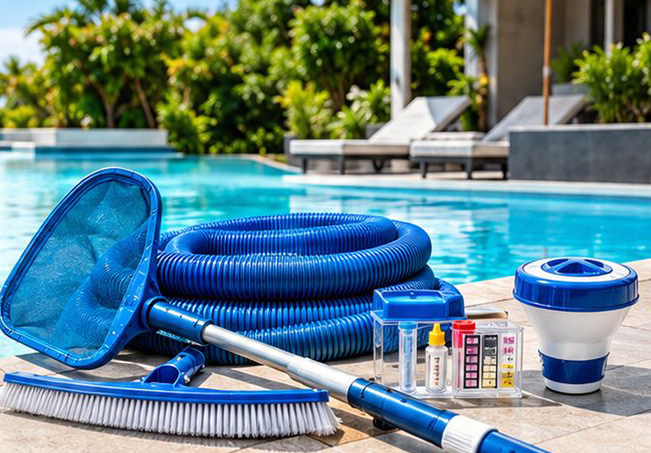
What You Actually Need to Self-Maintain a Pool (2026) – Pool Doctors Uganda Ltd Pool Equipment · Owner’s Guide What You Actually Need to Self-Maintain a Pool (2026) By Pool Doctors Uganda September 2026 6 min read Chemicals keep your water balanced. This is the physical equipment that actually does the cleaning, testing, and dosing, week to week, if you’re maintaining your own pool rather than using a service. Here’s what’s genuinely essential, what’s a worthwhile upgrade, and what’s overkill for most home pools. The Basic Toolkit Five things cover routine self-maintenance for most pools. Everything else on this page is an upgrade, not a requirement. TH Always needed Telescopic Handle The pole everything else attaches to. Adjustable length, aluminium construction. VH Always needed Vacuum Hose Connects your cleaning head to the filtration system. Length and duty rating should match your pool’s size and usage. SK Always needed Skimmer Net Daily surface debris removal. The fastest, cheapest maintenance habit that actually prevents bigger problems. FB Always needed Floor Brush For loosening debris and light buildup on pool surfaces before vacuuming. TK Always needed Test Kit You can’t self-maintain chemistry you’re not testing. A 3-way kit covers pool and spa; test liquids alone are the simpler option. Worthwhile Upgrades None of these are required to maintain a pool yourself. They save time, reduce manual work, or handle a specific recurring problem. WS Upgrade Wheel Sweeper Automates debris collection instead of manual brushing and vacuuming pass by pass. Available heavy and light duty. AB Upgrade — situational Algae Brush Stiffer bristles for scrubbing algae off surfaces. Only worth owning if algae is a recurring problem, not routine use otherwise. CD Upgrade — automation Floating Chemical Dispenser Slowly releases chlorine automatically instead of manual dosing between visits. SCG Upgrade — bigger investment Salt Chlorine Generator Converts salt to chlorine automatically, significantly reducing manual dosing. The largest upfront cost on this page, and the biggest reduction in ongoing manual work. Heavy Duty vs Light Duty: Which Sweeper? Light Duty Fine for smaller pools, or pools that don’t need daily attention. Fewer wheels, lighter build. Heavy Duty Built for bigger pools, rougher surfaces, or actual daily use. More wheels, more durable construction, holds up longer under real use. Buying heavy duty for a pool that doesn’t need it isn’t wrong. It’s just not necessary, the same logic applies to hose length and duty rating. Equipment Prices in Uganda (2026) Real pricing, updated as anything changes. Product Available Options Telescopic Handle (Aluminium) 8m, 5m, 3m Vacuum Hose, Heavy Duty 30m, 15m Vacuum Hose, Light Duty (Set) 15m, 12m Skimmer Rack/Net, Heavy Duty (Aluminium Frame) Standard Skimmer Rack/Net, Light Duty Standard Floor Brush 18″ Wire / Algae Brush 10″ Wheel Sweeper, Heavy Duty (Black) 12-wheel, 8-wheel Wheel Sweeper, Light Duty (Blue) 8-wheel Floating Chemical Dispenser (S.G Tech) Standard, Blue/White Salt Chlorine Generator SQ 50 Set Chlorine Feeders VTP 009 Medium Test Liquids / Solutions Pair 3-Way Water Test Kit (Pool & Spa) Set Key Takeaways Five items cover routine self-maintenance: handle, hose, skimmer, brush, and a test kit. Everything else is optional. Heavy duty isn’t automatically better, match the tool to your pool’s actual size and use. Algae brushes and chemical dispensers solve specific problems, they’re not universal requirements. A Salt Chlorine Generator is the biggest upfront cost here, and the biggest reduction in ongoing manual work, worth it if you want automation, not required if you don’t. Self-maintenance covers routine cleaning and testing. Equipment failures and persistent problems are still worth a professional visit. Get Equipped, Fast Real prices, no quote required. Orders typically delivered within 72 hours, subject to distance and logistics. Chat on WhatsApp Call +256 752 665528 Or message +256 752 665528 directly and type ORDER. Continue Reading → Why Is My Pool Turning Green in Uganda? 5 Causes and Fast Fixes → Swimming Pool Maintenance in Uganda: Complete Guide for Kampala Pool Owners → How Much Does a Swimming Pool Cost in Uganda? (2026 Complete Guide) → How to Choose the Best Swimming Pool Builder in Uganda → Sauna & Steam Bath Installation in Uganda: The Complete Guide (2026)
Read more

Pool Chemicals in Uganda: The Complete Buyer’s Guide (2026)

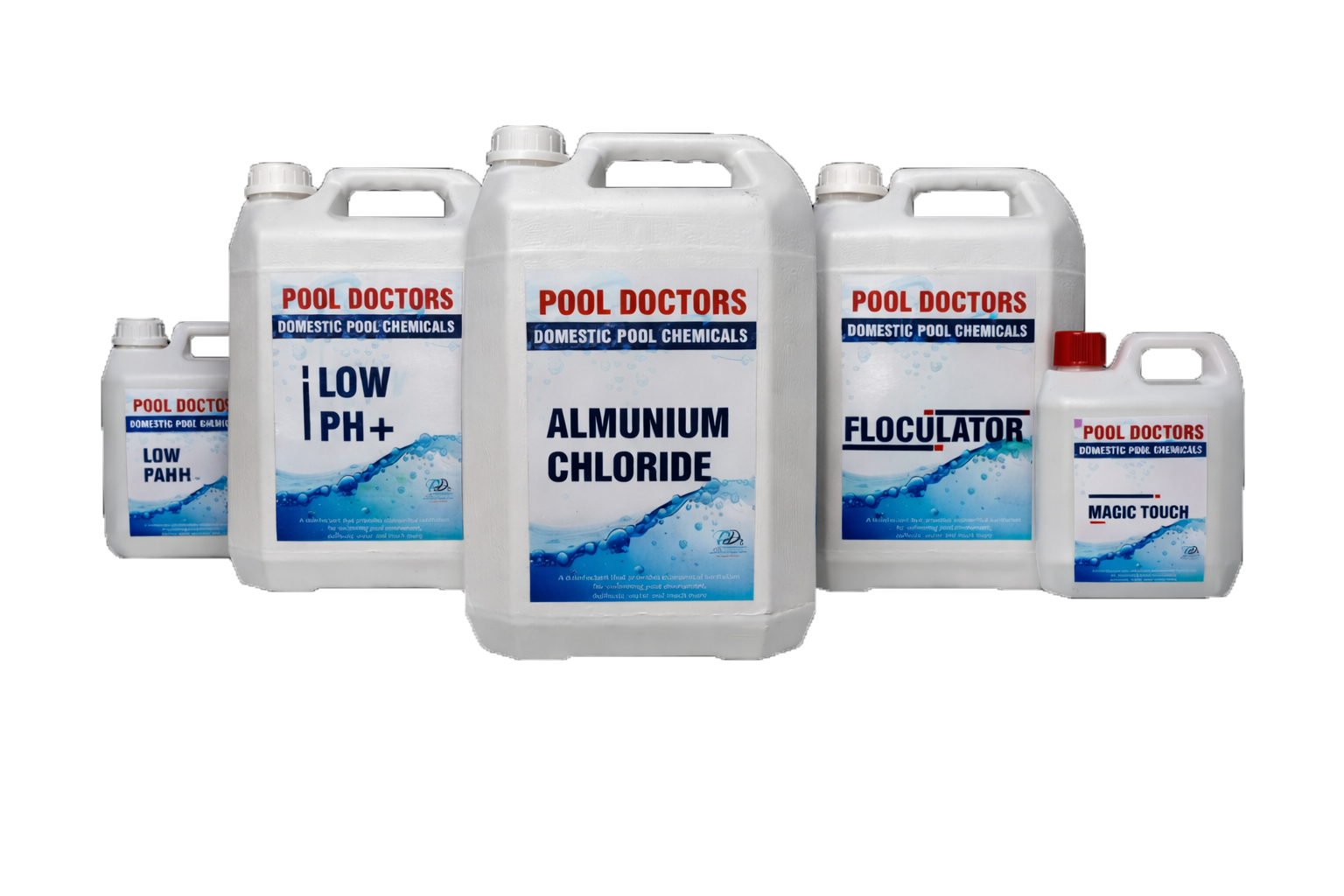
Pool Chemicals in Uganda: The Complete Buyer’s Guide (2026) – Pool Doctors Uganda Ltd Pool Chemicals · Buyer’s Guide Pool Chemicals in Uganda: The Complete Buyer’s Guide (2026) By Pool Doctors Uganda September 2026 6 min read Pool Chemicals · Sizes & Pricing · Uganda 2026 If you already understand your pool’s chemistry and just need to know what to buy, in what size, at what price, this guide is for you. For the full technical picture — water testing, dosing sequence, and Uganda-specific parameters — see our chemistry guide. This one is the practical companion: what’s actually in stock, and what it costs. Why Pool Chemistry in Uganda Is Different Uganda’s equatorial climate affects how every pool chemical performs, and it’s worth knowing before you buy anything. Kampala’s intense UV radiation breaks down unstabilised chlorine far faster than in cooler climates — a pool sitting in direct sun can lose its chlorine protection within hours if the wrong product is used. The two rainy seasons, March to May and October to November, dilute pool chemistry rapidly. And warm year-round temperatures mean algae risk never really goes away the way it might seasonally elsewhere. This is why the right product matters more here than generic advice usually accounts for. What Every Pool Needs vs What’s Situational Two things are non-negotiable for any pool: chlorine and pH balance. Everything else in our range solves a specific problem, and buying it before you need it is usually a waste. Cl Always needed Chlorine Your pool’s primary defence. Available in 65% and 90% concentration, powder or tablet. pH Always needed pH Balancers Magadi PH+ and PH-, for keeping water in the correct range. AL Situational Algaecide For pools with visible or developing algae — not routine use if you don’t have the problem. AS Situational Anti-Stain For surface staining from metals or organic buildup. FL Situational Flocculator (Aluminium Sulphate) For cloudy water specifically — a filtration fix, not a sanitation one. MT Situational Magic Touch A water clarifier — improves clarity directly. CS Supporting product Chlorine Stabilizer Slows how fast Kampala sun burns off chlorine. A supporting product, not a substitute for chlorine itself. Chlorine 65% vs Chlorine 90%: What’s Actually Different Chlorine 65% Lower concentration, so more product is needed for the same effect. Available in powder and 1kg tablets. Chlorine 90% More concentrated — less product does the same job, but dosing has to be adjusted accordingly, not swapped one for one against 65% at the same quantity. Not sure which fits your setup? Ask before buying either — the wrong concentration at the wrong dose is a common and avoidable mistake. Choosing the Right Size Sizes run from 1kg to 50kg. Smaller packs suit occasional top-ups or when you don’t yet have an established usage pattern. Bulk sizes make sense once you do, or for larger and commercial-scale pools, where repeated small purchases cost more in trips and handling than buying in bulk saves per unit. Pool Chemical Prices in Uganda (2026) Real pricing, updated as anything changes. Product Available Sizes Chlorine 65% (powder) 45kg, 20kg, 5kg — also 1kg tablets Chlorine 90% 50kg powder, 5kg powder — also 1kg tablets Magadi PH+ 50kg, 20kg, 5kg PH- 20L, 5L Flocculator (Aluminium Sulphate) 50kg, 25kg, 5kg Poly Aluminium Chloride 25kg, 5kg Anti-Stain 20L, 5L, 1L Algaecide 20L, 5L Magic Touch (water clarifier) 20L, 5L, 1L Chlorine Stabilizer 1kg Key Takeaways Use stabilised chlorine choices suited to Uganda’s UV exposure, not whatever’s cheapest on a shelf. Chlorine 65% and 90% aren’t interchangeable at the same quantity — concentration changes the dose. Algaecide, Anti-Stain, and Flocculator solve specific problems — they’re not routine purchases unless you have that problem. Buy the size that matches your actual usage pattern, not the best price per kilogram. Full technical dosing guidance lives in our chemistry guide — this page is for buying, not testing. Get What You Need, Fast Real prices, no quote required. Orders typically delivered within 72 hours, subject to distance and logistics. Chat on WhatsApp Call +256 752 665528 Or message +256 752 665528 directly and type ORDER. Continue Reading → Why Is My Pool Turning Green in Uganda? 5 Causes and Fast Fixes → Swimming Pool Maintenance in Uganda: Complete Guide for Kampala Pool Owners → How Much Does a Swimming Pool Cost in Uganda? (2026 Complete Guide) → How to Choose the Best Swimming Pool Builder in Uganda → Sauna & Steam Bath Installation in Uganda: The Complete Guide (2026)
Read more

Pool Equipment in Uganda: Pumps, Filters, Steam Generators, and What Every Pool Owner Needs to Know (2026)

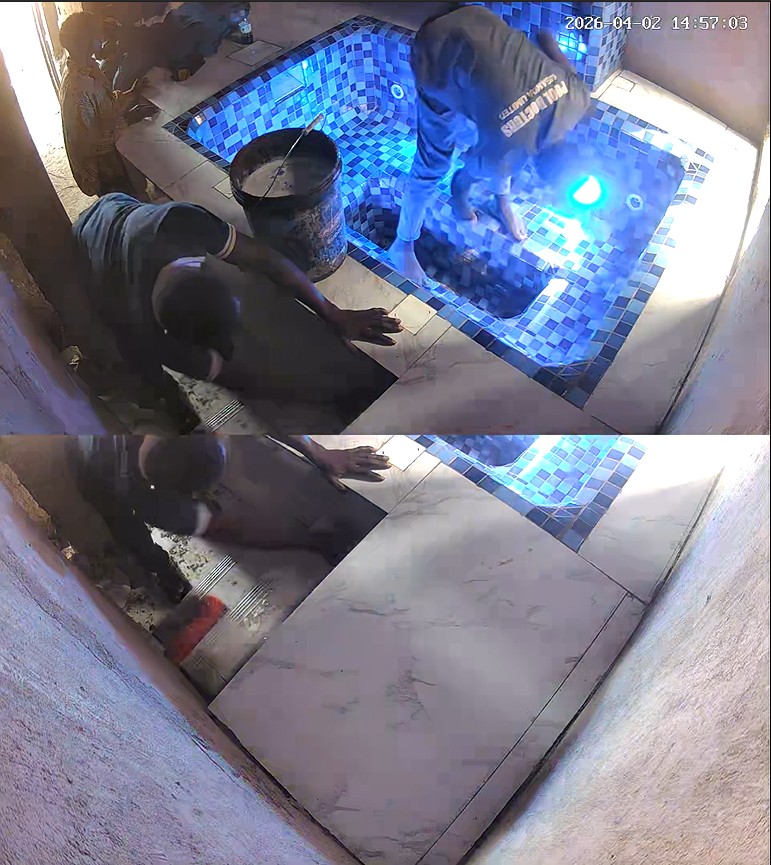
Pool Equipment in Uganda: Pumps, Filters, Steam Generators, and What Every Pool Owner Needs to Know (2026) Pool Doctors Uganda — Equipment Guide Pool Equipment in Uganda: Pumps, Filters, Steam Generators, and What Every Pool Owner Needs to Know (2026) Most people can tell you what their pool looks like. Almost nobody can tell you what’s actually running it — and that gap is exactly where small, cheap problems turn into large, expensive ones. Here is a straightforward breakdown of the equipment that actually keeps a pool, or a pool-and-wellness facility, running: what each piece does, what tends to go wrong, and why catching problems early is worth far more than most owners realize. The Pump The pump moves water out of the pool, through the filter and treatment system, and back in, continuously, for hours a day, every day. Filtration, chemical distribution, and basic water clarity all depend on that circulation happening properly. A pump undersized for the pool it serves runs constantly and still underperforms. One that’s oversized wastes electricity and strains the rest of the system unnecessarily. The warning signs are usually there before the failure is: a pump running louder than it used to, weaker flow at the return jets, or a power bill that’s crept up without an obvious reason. Uganda’s power supply adds a local wrinkle. Voltage fluctuations and outages are common enough that pump motors, and the electronics built into modern pump systems, take real wear from power instability that pool owners on more stable grids don’t have to think about. The Filter The filter’s job is easy to underestimate: catch what the pump can’t process on its own — debris, organic matter, the fine particulate that makes water look cloudy even when it reads “clean” chemically. Most systems use one of a few filter types — sand, cartridge, or diatomaceous earth — each with its own cleaning cadence and its own warning signs. A filter that isn’t cleaned or backwashed on schedule doesn’t fail all at once. It gets gradually less effective, which means the pump and the chemicals start working harder to compensate for something a five-minute check would have caught. The Steam Generator If your property has a sauna or steam room, the generator running it isn’t part of your pool’s circulation system at all. It’s a separate piece of equipment with its own maintenance schedule, and treating it as an afterthought of pool upkeep is one of the more common oversights we see. Steam generators are prone to mineral scaling over time, which reduces efficiency and can shorten the unit’s working life if it’s never addressed. They also need proper drainage and ventilation to run safely. Wellness facilities adding steam rooms as an amenity often underestimate this as its own maintenance line item until the unit underperforms. Dosing Equipment Manual testing and dosing means reacting to where the water was at the moment you tested it — which, in Uganda’s heat, can shift meaningfully within a single day. Automated dosing equipment monitors and adjusts chemical levels continuously rather than in daily or weekly snapshots. It doesn’t remove the need for oversight, but it narrows the swings between over-treated and under-treated water that cause most of the visible problems owners actually complain about. What Neglect Actually Costs Cost example UGX 150,000 today. That’s what a scheduled pump-seal replacement costs: a routine job, done in under an hour. Leave that same leak for six to eight weeks and it usually reaches the motor bearings. At that point the repair becomes UGX 1.8 to 2.2 million, because you’re buying a motor instead of a seal, plus whatever it costs to have the pool sitting idle while the right one gets sourced. Here’s the pattern behind almost every emergency equipment call we get: nothing about it was actually sudden. A pump that “suddenly” failed had been running inefficiently for weeks. A steam generator that “suddenly” stopped had been scaling up for months. The failure is sudden. The cause almost never is. Everything on site is connected, even when it doesn’t look that way. A filter that’s behind on cleaning makes the pump work harder, and a pump working harder wears out sooner than it should. By the time something actually breaks, that’s rarely the first thing that went wrong. It’s just the last thing that was still holding on. A maintenance visit isn’t about fixing one part. It’s about catching the two or three things that would’ve been next month’s emergency call. — Ivan Idondo, Founder & Civil Engineer, Pool Doctors Uganda Limited For Commercial Properties A residential pool down for a day is an inconvenience. A hotel pool, a school’s aquatic facility, or a development’s shared amenity being down is a different kind of problem — guest experience, safety compliance, and in some cases liability, riding on equipment most guests never think about until it stops working. The right approach isn’t reactive service calls. It’s a maintenance plan built around the equipment actually on site, on a schedule that catches wear before it becomes downtime. Where This Starts None of this requires a pool owner to become an equipment expert. It requires someone who already is one, checking in on a schedule instead of waiting for a call. Free site consultation. No commitment required. Pool Doctors Uganda comes to your property, assesses your equipment, and gives you an honest read on what actually needs attention. 📲 WhatsApp us: +256 752 665528 Visit pooldoctors.ug Pool Doctors Uganda Ltd — The Aquatic Solutions Continue Reading → Why Is My Pool Turning Green in Uganda? 5 Causes and Fast Fixes → Swimming Pool Maintenance in Uganda: Complete Guide for Kampala Pool Owners → How Much Does a Swimming Pool Cost in Uganda? (2026 Complete Guide) → How to Choose the Best Swimming Pool Builder in Uganda → Sauna & Steam Bath Installation in Uganda: The Complete Guide (2026)
Read more

Swimming Pool Chemicals in Uganda: What You Need and Where to Get Them (2026)

Swimming Pool Chemicals in Uganda: What You Need and Where to Get Them (2026) | Pool Doctors Uganda Pool Chemicals · Complete Guide Swimming Pool Chemicals in Uganda: What You Need and Where to Get Them (2026) By Pool Doctors Uganda May 2026 8 min read Pool chemicals are the single most misunderstood aspect of pool ownership in Uganda. Most pool owners either use the wrong products, dose at the wrong quantities, buy the cheapest option available regardless of quality, or skip chemicals entirely for weeks at a time — then wonder why their pool is green. This guide covers every chemical your pool actually needs, what each one does, the correct parameters to maintain in Uganda’s specific climate, and where to get the right products. It also introduces Pool Doctors Uganda’s chemical supply service — the only place in Uganda where your chemicals are matched to your specific pool type, volume, and usage pattern by the engineers who maintain pools professionally. Why Pool Chemistry in Uganda Is Different Uganda’s equatorial climate creates specific conditions that affect how pool chemicals perform. Understanding these conditions is the foundation of effective pool chemistry management. Kampala’s intense UV radiation breaks down unstabilised chlorine significantly faster than in cooler or less sunny countries. A pool in Kampala sitting in direct sunlight can lose its chlorine protection within hours of treatment — making frequent re-dosing necessary if the wrong chlorine product is used. Uganda’s two rainy seasons — March to May and October to November — dilute pool chemistry rapidly and introduce organic contaminants that consume chlorine and destabilise pH. And the warm year-round temperatures create ideal conditions for algae growth whenever protection falls below the safe threshold. These factors mean that pool chemical guidance written for European or North American climates is not appropriate for Uganda. The products needed, the dosing frequencies required, and the parameters to maintain are all affected by local conditions. The 5 Chemicals Every Ugandan Pool Owner Needs Cl Chemical 01 — Primary Sanitiser Chlorine Chlorine is your pool’s primary defence against bacteria, viruses, and algae. Without sufficient chlorine, no other chemical can keep your pool safe or clear. In Uganda, chlorine is the most important chemical to get right — and the one most commonly used incorrectly. Stabilised vs unstabilised chlorine: This is the most important distinction for Ugandan pool owners. Unstabilised chlorine — sodium hypochlorite, commonly called liquid chlorine — is destroyed rapidly by UV radiation. In direct Kampala sunlight, unstabilised chlorine can lose most of its effectiveness within hours of being added. Stabilised chlorine — trichlor or dichlor, which contain cyanuric acid — is protected from UV breakdown and lasts significantly longer. For any outdoor pool in Uganda exposed to direct sunlight, stabilised chlorine is the correct choice. Target: 1.0 – 3.0 ppm Test: minimum weekly Use: stabilised chlorine for outdoor pools pH Chemical 02 — Balance Agent pH Adjuster (pH Plus and pH Minus) pH measures how acidic or alkaline your pool water is. The correct range is 7.2 to 7.6. This is the range at which chlorine works at full effectiveness, equipment lasts longest, and swimmers are most comfortable. Outside this range, every other chemical in your pool is compromised. pH too low (below 7.2): Chlorine becomes aggressively corrosive. It damages pool tiles, corrodes grout, attacks metal fittings, and irritates swimmers’ eyes and skin. Equipment fails faster. pH too high (above 7.8): Chlorine becomes increasingly ineffective — at pH 8.0 you are operating at roughly 20% chlorine effectiveness regardless of how much you add. This is the most common reason a pool turns green despite regular chemical treatment. Target: 7.2 – 7.6 Test: weekly minimum Action: test after every heavy rain Alk Chemical 03 — pH Stabiliser Alkalinity Balancer (Sodium Bicarbonate) Total alkalinity is the most overlooked chemical parameter in Ugandan pool management — and the one that causes the most frustration when it is wrong. Alkalinity acts as a buffer for your pH, preventing it from swinging dramatically in response to rain, swimmer load, or chemical addition. When alkalinity is too low, pH becomes unstable and difficult to control — it rises and falls sharply, making balanced chemistry nearly impossible to maintain. Most pool owners who report that “the pH keeps changing no matter how much adjuster I add” have a total alkalinity problem, not a pH problem. Correcting the alkalinity first stabilises the pH and makes all subsequent chemical management significantly more effective. Target: 80 – 120 ppm Test: weekly minimum Product: sodium bicarbonate Alg Chemical 04 — Preventative Algaecide Algaecide is a preventative chemical that significantly reduces the risk of algae outbreaks when used consistently as a weekly dose. It works by disrupting the cell membranes of algae — preventing them from multiplying even when chlorine levels drop temporarily between treatment sessions. In Uganda’s climate — with high organic matter input from rain and surrounding vegetation, and warm temperatures year-round — a weekly algaecide dose is not optional. It is the chemical that most consistently determines whether a pool owner spends money on prevention or significantly more money on emergency cure. Cheap, heavily diluted algaecide products provide almost no real protection. The product quality matters. Frequency: weekly dose Increase: during rainy season Warning: quality matters — avoid heavily diluted products Shock Chemical 05 — Reset Treatment Shock Treatment (Superchlorination) Shock treatment involves adding a high dose of chlorine to the pool — typically five to ten times the normal maintenance dose — to oxidise organic contaminants, destroy chloramines, and reset the water chemistry. It is not a substitute for regular maintenance. It is the emergency and periodic reset that keeps the water fundamentally clean. Every pool in Uganda needs shock treatment in three specific situations: after heavy rain that has significantly diluted the chemistry; after a period of heavy swimmer use such as a party or event; and any time the water shows early signs of cloudiness or colour change before a full green pool develops. Shock early and the problem
Read more

Jacuzzi and Spa Installation in Uganda: Everything You Need to Know (2026)

Jacuzzi and Spa Installation in Uganda: Everything You Need to Know (2026) | Pool Doctors Uganda Jacuzzi & Spa · Installation Guide Jacuzzi and Spa Installation in Uganda: Everything You Need to Know (2026) By Pool Doctors Uganda May 2026 8 min read A jacuzzi is one of the most requested wellness installations Pool Doctors Uganda receives enquiries about — and one of the most misunderstood. Most Ugandans assume a jacuzzi is either a small pool with jets or an exclusively hotel-grade luxury that requires a massive budget and a complex installation. Neither assumption is accurate. A jacuzzi — also called a hot tub or spa — is a self-contained hydrotherapy unit with heated water and pressurised jets. It is built for relaxation, muscle recovery, and therapeutic use. It can be installed indoors or outdoors, on a compact residential plot or within a commercial hotel facility, as a standalone unit or directly integrated into an existing pool installation. This guide covers everything you need to know before commissioning a jacuzzi installation in Uganda — the types available, honest cost ranges, the installation process, maintenance requirements, and the questions to ask before you sign anything. Jacuzzi vs Hot Tub vs Spa — What Is the Difference? These three terms are used interchangeably in Uganda — and in most of the world — but they have technical distinctions worth understanding before you specify your installation. A jacuzzi is technically a brand name — like Hoover for vacuum cleaners. It has become the generic term for any hydrotherapy unit with jets. A hot tub originally referred to a large wooden barrel-style soaking tub, usually without jets. A spa can refer to either a hydrotherapy unit or a broader wellness facility. In practice, when a client in Uganda says “I want a jacuzzi,” they mean a heated, jetted hydrotherapy unit — and that is what Pool Doctors Uganda installs. Types of Jacuzzi Installations Available in Uganda Pool Doctors Uganda installs four primary types of jacuzzi and spa units. The right choice depends on your available space, your budget, your intended use, and whether the installation is residential or commercial. Type 01 In-ground Custom Jacuzzi Built into the ground like a small pool. Fully tiled interior. Jets, heater, and filtration system integrated into the structure. The premium option — permanent, durable, and completely customisable in shape, size, and finish. Can be built adjacent to or integrated with a swimming pool. Type 02 Above-ground Prefabricated Spa A prefabricated acrylic or fibreglass unit delivered and installed on a prepared surface. Faster installation than in-ground builds. Lower upfront cost. Available in multiple sizes and jet configurations. Best for clients who want a jacuzzi without a full civil works project. Type 03 Pool-integrated Spa A jacuzzi built as part of a swimming pool installation — typically at one end of the pool, elevated slightly, with water spilling from the spa into the main pool. The most visually dramatic option. Designed and built as one engineering project. Best for luxury residential and commercial hotel installations. Type 04 Indoor Spa Room A jacuzzi installed within a dedicated indoor room — often combined with a sauna or steam bath. Requires waterproofing, ventilation, and specific electrical specification. Growing in popularity for upscale hotels and residential wellness rooms in Uganda. Which type is right for your property? The answer depends on your available space, whether you are building alongside a pool, your budget, and your intended use — daily personal relaxation or commercial guest amenity. Pool Doctors Uganda advises on the right type during a free site consultation before any installation begins. What Does a Jacuzzi Installation Cost in Uganda in 2026? Jacuzzi installation costs in Uganda vary significantly depending on the type of unit, the size, the jet specification, the heating system, and the level of civil works required. The ranges below provide a framework — every installation is quoted individually after a site assessment. Installation Type Capacity Estimated Cost (UGX) Timeline In-ground Custom Jacuzzi 2–6 person Verify with Ivan 3–5 weeks Above-ground Prefabricated Spa 2–8 person Verify with Ivan 3–7 days Pool-integrated Spa 2–4 person Verify with Ivan Built with pool project Indoor Spa Room 2–6 person Verify with Ivan 2–4 weeks Note: All pricing are confirmed directly with Pool Doctors Uganda before publishing. Cost depends on unit specification, jet count, heating system, electrical requirements, and civil works. WhatsApp us for a real quote — +256 752 665528. What Drives the Cost Up or Down The number of jets is one of the primary cost drivers — a 6-jet unit costs significantly less than a 30-jet therapeutic configuration. The heating system specification affects both installation cost and ongoing electricity consumption. In-ground builds require civil works — excavation, shell construction, waterproofing, tiling — that prefabricated units do not. The control system, from basic manual controls to fully automated digital panels with smartphone connectivity, adds to the equipment budget. And whether the jacuzzi is installed standalone or as part of a simultaneous pool project affects the overall cost significantly — combining the two is always more economical. The Installation Process — What to Expect Pool Doctors Uganda follows a structured process for every jacuzzi installation. Here is what it looks like from first contact to handover: 1 Free Site Consultation Our team visits your property, assesses the available space, reviews your electrical infrastructure, and discusses your requirements — size, jet configuration, heating preference, indoor or outdoor placement. No cost. No commitment. 2 Design and Quotation Based on the site consultation, we produce a design, specification, and itemised quote. For in-ground and pool-integrated builds, this includes structural drawings. For prefabricated units, this includes the unit specification and site preparation requirements. 3 Civil Works and Installation For in-ground builds — excavation, structural shell, waterproofing, tiling, plumbing, and electrical connection. For prefabricated units — site preparation, delivery, placement, plumbing connection, and electrical connection. Timelines range from 3 days for a prefabricated unit to 5 weeks for a complex in-ground installation. 4 Testing and Handover Full system
Read more

Why Is My Pool Turning Green in Uganda? 5 Causes and Fast Fixes (2026)

Why Is My Pool Turning Green in Uganda? 5 Causes and Fast Fixes (2026) | Pool Doctors Uganda Pool Maintenance · Problem Solving Why Is My Pool Turning Green in Uganda? 5 Causes and Fast Fixes (2026) By Pool Doctors Uganda May 2026 8 min read A green pool is one of the most common problems Pool Doctors Uganda is called to address — and one of the most misunderstood. Most pool owners in Kampala blame the pump, the filter, or the brand of chemicals they are using. In the vast majority of cases, none of these are the real cause. Green pool water is caused by algae. Algae grows for specific, identifiable reasons — and every one of those reasons is fixable. This guide covers the 5 most common causes of green pool water in Uganda, explains exactly why each one happens in our specific climate, and gives you the fast fix for each one. If your pool is green right now — start with Cause 1. Work through the list in order. By the time you reach the end of this article, you will know exactly what is wrong and exactly what to do about it. Before you read further: Do not drain your pool. A green pool almost never needs to be drained. Draining wastes water, risks your pool shell cracking if the water table is high, and the algae returns immediately if the underlying cause is not addressed. Treat the water. Fix the cause. Draining is almost always the wrong answer. Why Green Pools Are More Common in Uganda Than Elsewhere Uganda’s climate creates specific conditions that make green pools more likely than in cooler or less sunny countries. Understanding these conditions helps you prevent the problem — not just fix it after it happens. Kampala sits close to the equator, which means intense UV radiation year-round. UV rays break down chlorine significantly faster than in cooler climates — a pool in Kampala loses its chlorine protection faster than an equivalent pool in London or Nairobi. Uganda also has two rainy seasons — March to May and October to November — during which heavy rainfall dilutes pool chemicals, drops pH, and introduces organic matter and contaminants from runoff. These two factors combined — high UV and seasonal heavy rain — mean that a Ugandan pool owner who follows generic pool maintenance advice written for other climates will almost certainly end up with a green pool at some point. 1 Cause 01 — Most Common Chlorine Level Has Dropped Below the Safe Threshold This is the cause of green water in the majority of cases Pool Doctors Uganda is called to address. When free chlorine drops below 1.0 parts per million (ppm), your pool loses its primary defence against algae. Algae spores are present in every pool — introduced naturally through rain, wind, and swimmers. They are invisible and harmless when chlorine is at the correct level. When chlorine drops, those spores begin multiplying. Within 24 to 48 hours in Uganda’s warm temperatures, a clear pool can become visibly green. The most common reason chlorine drops in Uganda is not that you stopped adding it — it is that the chlorine you are adding is being destroyed faster than you realise. Uganda’s direct equatorial sunlight breaks down unstabilised chlorine extremely rapidly. If you are using unstabilised chlorine in an outdoor pool, you may be adding the correct dose but losing it within hours of treatment. The Fast Fix Test your chlorine level immediately with a calibrated kit — not a colour strip. If free chlorine is below 1.0 ppm, shock the pool with a high-dose chlorine treatment (superchlorination). For ongoing prevention, switch to stabilised chlorine — it contains cyanuric acid that protects the chlorine from UV breakdown and lasts significantly longer in Uganda’s sunlight. Run the pump continuously for 24 hours after shocking. Urgency: Act today 2 Cause 02 pH Is Out of Range — Making Chlorine Ineffective This is the cause that surprises most pool owners. Your pool can have the correct chlorine level — test it and it reads 2.0 ppm, well within the safe range — and your pool will still turn green. How? Because if your pH is above 7.8, your chlorine becomes progressively less effective. At pH 8.0, chlorine is operating at roughly 20% of its normal effectiveness. At pH 8.5, it is essentially doing nothing. In Uganda, pH tends to rise after heavy rain because rainwater is naturally slightly alkaline. It also rises when pool water evaporates in direct sunlight and is replaced with fresh water. A pool owner who adds chlorine consistently but never tests or adjusts pH will find their pool turning green despite what appears to be correct chemical treatment. The Fast Fix Test your pH immediately. The correct range is 7.2 to 7.6. If pH is above 7.8, add pH Minus (sodium bisulphate or muriatic acid) in small doses, waiting 30 minutes between doses and retesting each time. Do not add large amounts at once — pH can drop past the correct range quickly. Once pH is back in range, your existing chlorine will begin working again immediately. If the pool is already green, shock treat at the same time. Urgency: Act within 24 hours 3 Cause 03 Blocked or Undersized Filter — Chemicals Not Circulating Your filter is your pool’s kidney. When it is working correctly, it circulates chemically treated water through every part of the pool continuously. When it is blocked or undersized for your pool’s volume, chemicals sit in concentrated pockets near the return jets while other areas of the pool receive little or no treated water. Algae grows in those untreated areas — typically the far corners of the pool floor and the areas behind steps or benches — and spreads from there. A blocked filter also means your pump is working harder than it should, increasing electricity consumption and shortening the pump’s lifespan. In Uganda’s dusty environment, filter media becomes blocked
Read more

Sauna & Steam Bath Installation in Uganda: The Complete Guide (2026)
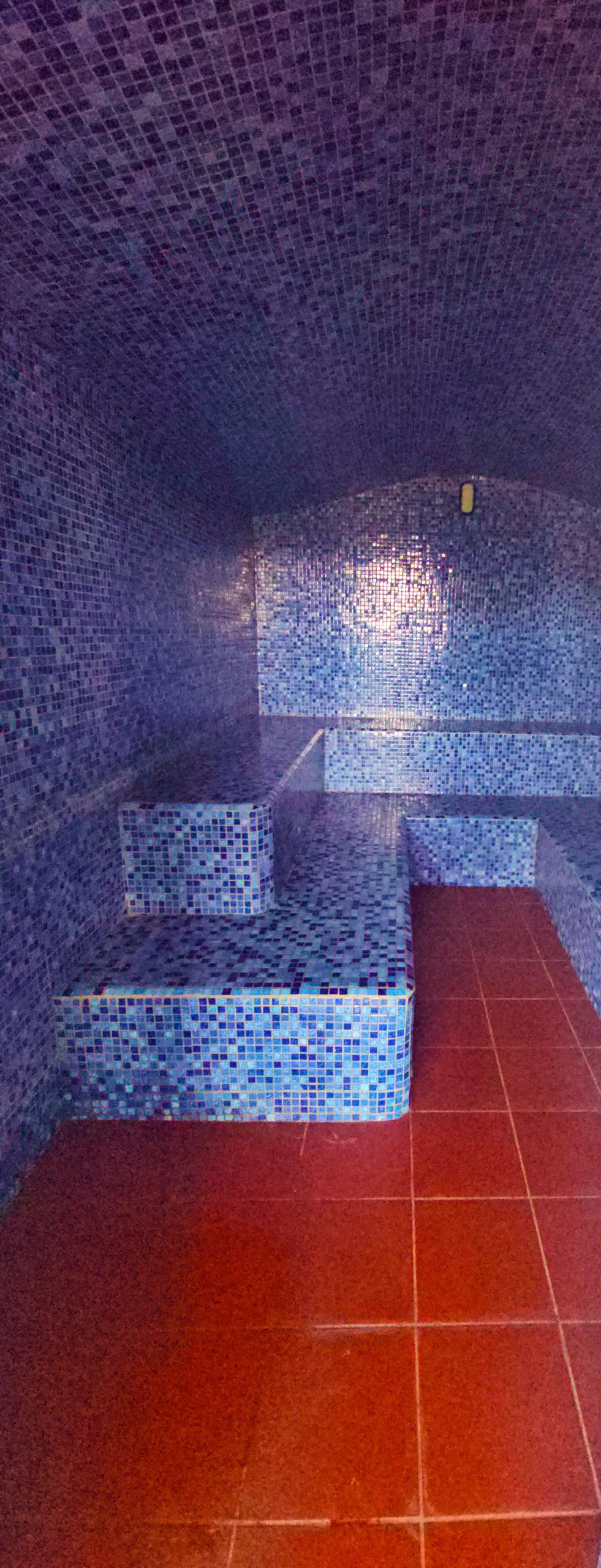
Sauna & Steam Bath Installation in Uganda: The Complete Guide (2026) | Pool Doctors Uganda Sauna & Wellness · Installation Guide Sauna & Steam Bath Installation in Uganda: The Complete Guide (2026) By Pool Doctors Uganda May 2026 8 min read Sauna and steam bath installations in Uganda are no longer limited to five-star hotels and international resorts. Over the last several years, a growing number of Ugandan homeowners, guesthouses, health clubs, and boutique hotels have been installing private sauna and steam rooms — and discovering that the cost, the installation process, and the long-term maintenance are all far more manageable than they assumed. Pool Doctors Uganda designs and installs sauna rooms, steam baths, and jacuzzi wellness spaces for residential and commercial properties across Uganda. This guide covers everything you need to know before you start — the types available, honest cost ranges, the installation process, the health benefits, and what ongoing maintenance actually looks like in Uganda’s climate. Why Ugandans Are Installing Saunas and Steam Baths The wellness industry globally has shifted the perception of saunas from luxury to necessity. In Uganda, the same shift is happening — but driven primarily by two different audiences with different motivations. Residential homeowners are installing saunas and steam rooms as part of a broader outdoor lifestyle upgrade — often alongside a pool, jacuzzi, or landscaping project. The appeal is straightforward: a private wellness space at home that eliminates the need for gym memberships, spa visits, or hotel day passes. Hotels, guesthouses, and health clubs are installing saunas and steam rooms as revenue-generating amenities. In Kampala’s increasingly competitive hospitality market, wellness facilities have become a meaningful differentiator — a reason for guests to choose one property over another and to stay longer when they do. In both cases, the decision to install is almost always triggered by the same realisation: the cost is lower than expected, the installation is more straightforward than imagined, and the return — whether in personal wellbeing or in guest satisfaction — is immediate. Types of Sauna and Steam Bath Installations Pool Doctors Uganda installs four primary wellness room types. Understanding the differences between them helps you choose the right installation for your property, your budget, and your intended use. Type 01 Traditional Dry Sauna The classic sauna experience. Heated by a sauna stove — electric or wood-burning — to temperatures between 70°C and 100°C. Low humidity. Cedar or pine interior lining. Best for residential homes and hotels seeking an authentic sauna experience. Type 02 Steam Bath (Steam Room) A fully sealed room with a steam generator producing 100% humidity at temperatures between 40°C and 50°C. Tiled interior — not wood. Best for skin health, respiratory benefits, and properties that want a more accessible temperature experience. Type 03 Infrared Sauna Uses infrared panels to heat the body directly rather than the surrounding air. Lower ambient temperature — typically 45°C to 65°C — making it more comfortable for longer sessions. More energy-efficient than traditional saunas. Growing in popularity for residential installations. Type 04 Combined Sauna & Steam A dual-function room that offers both dry sauna and steam bath experiences in a single space. The preferred choice for commercial hotels and health clubs where guests want maximum flexibility. Higher installation cost but significantly higher amenity value. Which type is right for your property? The answer depends on your primary user — residential or commercial — your available space, your budget, and whether you prioritise dry heat or steam humidity. Pool Doctors Uganda advises on the right type during a free site consultation before any installation begins. The Health Benefits — Why People Install Them Beyond the comfort and the lifestyle appeal, sauna and steam bath use is backed by a substantial body of research on physical health benefits. Understanding these benefits helps both residential buyers and commercial operators communicate the value of the installation to their users and guests. 💓 Cardiovascular health Regular sauna use mimics the cardiovascular effects of moderate exercise. Studies show reduced risk of cardiovascular events with consistent use. 🧖 Skin health Steam opens pores, improves circulation to the skin surface, and assists with natural detoxification. Particularly effective in Uganda’s humid climate. 🫁 Respiratory relief Steam inhalation reduces congestion and supports respiratory health. Beneficial for clients in Kampala’s dusty urban environment. 💪 Muscle recovery Heat therapy accelerates muscle recovery after physical exertion. Particularly valued in hotels near fitness facilities and for sports-focused users. 😴 Sleep quality Evening sauna sessions lower core body temperature afterwards, signalling the body to sleep. Consistently reported by residential sauna owners as a primary benefit. 🧠 Stress reduction Heat exposure triggers endorphin release and reduces cortisol levels. The most immediately noticeable effect for first-time sauna users. What Does Sauna Installation Cost in Uganda in 2026? Sauna and steam bath installation costs in Uganda vary significantly depending on the type of installation, the size of the room, the quality of materials, and the specific requirements of your property. The ranges below are provided as a starting framework — every installation is quoted individually after a site assessment. Installation Type Room Size Estimated Cost (UGX) Best For Traditional Dry Sauna 2–4 person capacity 14M+ Residential homes, boutique guesthouses Steam Bath Room 2–6 person capacity 18M+ Hotels, health clubs, larger homes Infrared Sauna 1–4 person capacity Imported (Depending on the cost at the moment) Residential, fitness-focused clients Combined Sauna & Steam 4–10 person capacity 28M – 40M+ Hotels, resorts, commercial facilities Note: All pricing are confirmed directly with Pool Doctors Uganda before publishing. Cost depends on room dimensions, material specification, electrical requirements, and site access. WhatsApp us for a real quote based on your specific property — +256 752 665528. What Drives the Cost Up or Down Several factors move the installation cost significantly. Room size is the most obvious — a 2-person sauna costs considerably less than a 10-person commercial steam room. Material quality matters: cedar is the premium choice for traditional saunas; high-quality non-porous tiles are essential for steam rooms to prevent mould. The
Read more

Infinity Pools in Uganda: Design, Cost, and What to Expect in 2026

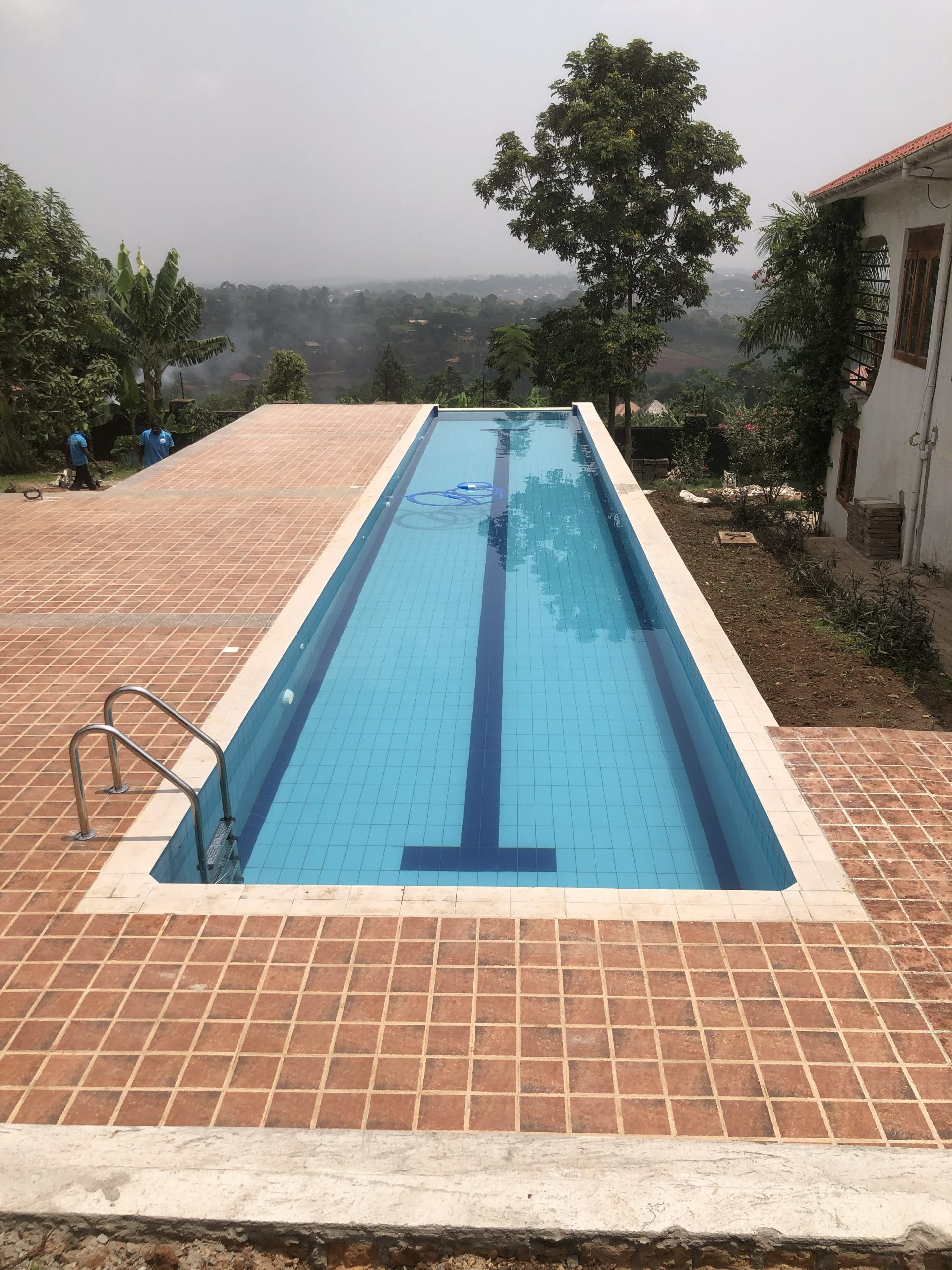
Infinity Pools in Uganda: Design, Cost, and What to Expect in 2026 | Pool Doctors Uganda Infinity Pools · Design & Cost Guide Infinity Pools in Uganda: Design, Cost, and What to Expect in 2026 By Pool Doctors Uganda April 2026 9 min read Of all the pool types Pool Doctors Uganda builds, the infinity edge pool generates the most questions — and the most misconceptions. It is the pool type almost every homeowner with a hillside property dreams about. It is also the one most people talk themselves out of before they have ever spoken to an engineer. Most of those reasons for hesitation are based on assumptions, not facts. This guide gives you the facts — the real design process, honest cost ranges, the site conditions that make an infinity pool possible, and what working with Pool Doctors from first conversation to final handover actually looks like. If you have been thinking about an infinity pool but assumed it was out of reach — read this first. What Is an Infinity Pool and How Does It Actually Work? An infinity pool — also called a vanishing edge or negative edge pool — is a pool where one or more edges appear to merge seamlessly with the surrounding landscape. From the swimmer’s perspective, the water appears to have no boundary — it simply continues until it meets the sky, a hillside, or a distant view. The engineering behind this effect is straightforward in principle but demanding in execution. One edge of the pool has a wall that sits slightly below the water level. Water flows continuously over this lower wall and falls into a concealed catch basin or balance tank built below and behind the vanishing edge. A pump then recirculates this water back into the main pool — a continuous, silent cycle that keeps the edge flowing and the level constant. The visual result — water disappearing into the horizon — depends entirely on the precision of the engineering. The height of the vanishing wall, the design of the catch basin, the capacity of the recirculation pump, and the alignment of the pool with the view beyond it are all decisions that must be made by a qualified engineer with experience building this specific pool type on Uganda’s terrain. Is Your Property Suitable for an Infinity Pool? This is the first question a qualified engineer will answer during your site assessment — and it is the most important question in the entire process. Not every plot is suitable for an infinity pool. But more plots in Kampala and Uganda are suitable than most homeowners assume. Sites that work well for infinity pools Hillside plots in areas like Muyenga, Lubowa, Kololo, Naguru, Bugolobi, and Ntinda are natural candidates. The slope of the land creates the elevation differential that makes the vanishing edge effect most dramatic — the pool sits on higher ground and the view opens up beyond the lower edge. Plots with a natural view of Kampala’s skyline, Lake Victoria, or surrounding hills are ideal. Elevated flat plots can also accommodate infinity pools, particularly when the pool is positioned at the edge of the property with a view across the surrounding landscape. The effect is slightly different from a true hillside build but equally striking when designed correctly. Sites that require additional engineering consideration Plots with a high water table require specific structural design to prevent hydrostatic pressure from affecting the pool shell. Rocky ground increases excavation costs. Very steep slopes require detailed geotechnical assessment before any design work begins. None of these factors make an infinity pool impossible — they make the site assessment more important, not less. Critical: Never accept a quote for an infinity pool from a contractor who has not visited your site. The vanishing edge must be aligned with your specific view, your specific slope, and your specific soil conditions. These decisions cannot be made remotely. Any contractor who quotes you without a site visit is guessing — and on an infinity pool, guessing is expensive. The Design Process: From Site Assessment to Finished Pool At Pool Doctors Uganda, every infinity pool project follows a structured process led by Ivan Idondo, our founder and civil engineer. Here is what that process looks like from first contact to handover: Phase 01 Free Site Assessment Our engineer visits your property. We assess the slope, soil conditions, water table, access, and view. We discuss your vision and what the site can realistically support. No cost. No commitment. Phase 02 Design and Quotation Based on the assessment, we produce a site-specific design. Pool dimensions, vanishing edge alignment, catch basin specification, equipment selection, finish, and all additional features. Then we give you an honest, itemised quote. Phase 03 Construction Excavation, structural shell, plumbing, electrical, tiling, coping, and equipment installation. Ivan Idondo is personally involved in the oversight of every Pool Doctors infinity pool build. Typical construction timeline: 6 to 10 weeks depending on size and site conditions. Phase 04 Testing and Handover Full equipment testing, water chemistry balancing, and client walkthrough. We train you or your team on the correct maintenance routine for your specific pool. Written handover documentation included. What Does an Infinity Pool Cost in Uganda in 2026? Infinity pools are the most expensive pool type to build — and the cost range is wider than any other pool type because no two infinity pools are the same. The site, the size, the finish, the view alignment, and the additional features all affect the final figure significantly. What we can provide are honest starting ranges based on projects Pool Doctors has completed: Cost Component What It Covers Notes Base construction Shell, vanishing edge wall, catch basin, basic plumbing Starting from UGX 150M Tiling and finish Interior tiles, coping, waterline tiles Mosaic tiles significantly increase this figure Equipment Pump, filter, recirculation system, chemical dosing Quality equipment reduces long-term maintenance cost Lighting Underwater LED system, perimeter lighting Optional but highly recommended for infinity pools Surrounding features Decking,
Read more

How to Choose the Best Swimming Pool Builder in Uganda

How to Choose the Best Swimming Pool Builder in Uganda (2026 Guide) | Pool Doctors Uganda Pool Construction · Buyer’s Guide How to Choose the Best Swimming Pool Builder in Uganda (2026 Guide) By Pool Doctors Uganda April 2026 9 min read Building a swimming pool in Uganda is one of the most significant investments you will make in your property. Get it right and you add lasting value, a stunning centrepiece, and years of enjoyment. Get it wrong and you are looking at structural failures, ongoing repairs, and a second round of construction costs to fix what should have been built correctly the first time. Uganda’s pool construction market includes a wide range of operators — from qualified engineering-led companies with verified portfolios to informal builders with no certification, no warranty, and no accountability. The price difference between them can look attractive. The difference in outcome almost never is. This guide gives you the exact questions to ask any pool builder before you sign anything — and the answers that should make you walk away. Why Choosing the Right Pool Builder Matters More Than You Think A swimming pool is not a product you purchase. It is an engineered structure built on and into your specific plot of land. The soil conditions, water table, slope of your property, and local weather patterns all affect how your pool must be designed and built. A builder who does not account for these factors is not building you a pool — they are gambling with your money. In eight years of operating across Uganda, Pool Doctors has been called to assess, repair, and in some cases completely reconstruct pools built by contractors who won projects on the basis of a low price quote. The patterns are consistent: inadequate site assessment, incorrect structural design, substandard materials, and no ongoing accountability once payment is received. The single most important decision in your pool project is not the pool type, not the tiles, and not the equipment. It is who you choose to build it. Before you read any further: If a pool builder gives you a final price without visiting your property first, that is not a quote. It is a guess. No qualified contractor can price a pool project without assessing the site. Walk away from any builder who quotes you remotely. The 5 Questions to Ask Any Pool Builder Before You Sign Anything Question 01 Are you qualified to build this, and can I see your completed projects? Pool construction is civil engineering. The person designing and overseeing your build should have a verifiable engineering background — not just experience watching other people build pools. Ask specifically about their qualifications and ask to see a portfolio of completed projects with locations you can verify or visit. Red flag: Vague answers about experience with no verifiable projects. Anyone can claim years in the industry. Projects are proof. Green flag: A specific, verifiable portfolio with project types, locations, and an engineering credential behind the work. At Pool Doctors Uganda, every project is led by Ivan Idondo, a qualified civil engineer with 15 years of engineering experience and 67+ completed projects across Uganda. Question 02 Will you carry out a full site assessment before giving me a final quote? Every plot in Uganda is different. Soil type, slope, access, underground water levels, and proximity to other structures all affect what can be built and how much it will cost. A proper site assessment before quoting is not optional — it is the only way to give you a number you can actually plan around. Builders who skip this step are either inexperienced or deliberately underquoting to win the job and adjust costs later. Red flag: A quote given over the phone or via WhatsApp based on dimensions alone, with no site visit. Green flag: A commitment to assess your specific site before issuing any final price. Pool Doctors Uganda offers free site assessments — no obligation, no cost, just an honest evaluation of what your property can support and what it will realistically cost. Question 03 What does your warranty cover, and what happens if something goes wrong after completion? A pool is a long-term structure. Cracks, leaks, tile failures, and equipment issues can emerge months or years after completion. A serious pool builder stands behind their work with a clear, written warranty. Informal builders with no business registration have no legal accountability — when something goes wrong, they are unreachable. Red flag: No written warranty. Verbal assurances only. A contractor who cannot be found after final payment is received. Green flag: A documented warranty covering structural work, with a clear process for raising and resolving post-completion issues. A registered company with a physical address and verifiable contact details. Question 04 What is your health, safety, and environmental commitment on site? Pool construction involves excavation, concrete work, heavy machinery, and chemical handling. A contractor with no formal health and safety framework is a liability risk on your property. In Uganda’s regulatory environment, any incident on your site during construction can have legal consequences for the property owner — not just the contractor. Red flag: No answer to this question, or a dismissive response. No visible site safety measures during construction. Green flag: A documented QHSE policy — Quality, Health, Safety, and Environment. Pool Doctors Uganda operates under a zero-injury, zero-environmental-damage commitment on every project, enforced by Ivan Idondo as the lead engineer on every build. Question 05 Who specifically will be managing my project, and will they be on site throughout? Many contractors win a project, then hand it to a subcontracted team with no direct supervision from the person who quoted you. The quality of the build depends on who is actually on site making decisions every day. Understand exactly who is managing your project, what their qualifications are, and how frequently they will be present during construction. Red flag: Vague answers about “our team” with no named individual taking responsibility for the
Read more

Swimming Pool Maintenance in Uganda: Complete Guide for Kampala Pool Owners (2026)

Swimming Pool Maintenance in Uganda: Complete Guide for Kampala Pool Owners (2026) | Pool Doctors Uganda Pool Maintenance · Kampala Guide Swimming Pool Maintenance in Uganda: Complete Guide for Kampala Pool Owners (2026) By Pool Doctors Uganda April 2026 8 min read Owning a swimming pool in Kampala is one of the best decisions you can make for your property. But a pool that is not maintained properly stops being an asset and starts being a problem — fast. Green water, damaged tiles, failed equipment, and costly emergency repairs are not inevitable. They are almost always the result of maintenance that was skipped, delayed, or done incorrectly. This guide covers everything a Kampala pool owner needs to know about maintaining their pool in 2026 — weekly tasks, real costs, the right chemicals, seasonal adjustments, and the mistakes that turn small issues into expensive ones. It is written by the Pool Doctors Uganda team, who have been maintaining pools across Kampala and Uganda for over eight years. Why Pool Maintenance in Uganda Is Different Uganda’s climate creates specific maintenance challenges that standard pool guides written for Europe or North America do not account for. Understanding these factors is the first step to maintaining your pool correctly. Kampala sits close to the equator, which means intense UV radiation year-round. Ultraviolet rays break down chlorine significantly faster than in cooler climates — meaning a pool in Kampala needs more frequent chemical treatment than an equivalent pool in London or Dubai. Heavy rainfall during the rainy seasons dilutes your pool water, throws off your pH balance, and introduces contaminants from runoff. Red Kampala soil, dust, and organic debris from surrounding vegetation enter your pool constantly and consume your sanitiser. These are not problems you can solve by following the instructions on a chemical packet. They require a maintenance routine designed specifically for Uganda’s conditions. The 5 Weekly Maintenance Tasks Every Kampala Pool Owner Must Do Consistent weekly maintenance is the single most effective thing you can do to protect your pool investment. These five tasks should be completed every week without exception. Task 01 Test Your Water Chemistry Test chlorine, pH, and alkalinity at minimum once per week. In Uganda’s climate, twice per week is better. Use a reliable test kit — not just the colour strips, which are often inaccurate in high-UV environments. Task 02 Dose Your Chemicals Based on your test results, add the correct amount of chlorine, pH adjuster, and alkalinity balancer. Never guess quantities. Overdosing is as damaging as underdosing and far more common than pool owners realise. Task 03 Brush Walls and Floor Brush all surfaces including walls, floor, and steps weekly. Brushing breaks up algae forming on surfaces before it becomes visible. It also prevents scale buildup at the waterline and distributes chemicals more evenly. Task 04 Vacuum or Run Automatic Cleaner Remove settled debris from the pool floor. In Kampala, red soil and organic debris accumulate quickly. Left sitting, debris consumes chlorine and creates conditions where algae and bacteria thrive. Task 05 Check and Clean the Filter Check your filter pressure gauge. If pressure is 8–10 psi above the clean starting pressure, backwash the filter. A clogged filter cannot clean your water regardless of how many chemicals you add. Important: In Uganda’s high-UV environment, run your pool pump for a minimum of 8 hours per day. Many pool owners reduce pump hours to save electricity. This is a false economy — poor circulation is one of the leading causes of green water and algae growth in Kampala pools. Understanding Pool Chemicals: What You Actually Need Pool chemicals are not complicated, but using the wrong ones or the wrong quantities is one of the most common and costly mistakes Kampala pool owners make. Here is a straightforward breakdown of what each chemical does and why it matters. Chlorine Chlorine is your primary sanitiser. It kills bacteria, viruses, and algae. The correct free chlorine level for a residential pool in Uganda is between 1.0 and 3.0 parts per million (ppm). Below 1.0 ppm, your pool is unprotected. Above 3.0 ppm, it becomes an irritant to swimmers. In direct Kampala sunlight, chlorine burns off faster than anywhere else in the world — which is why stabilised chlorine products, which include cyanuric acid to slow UV breakdown, are preferable for outdoor pools here. pH Adjuster pH measures how acidic or alkaline your water is. The ideal range is 7.2 to 7.6. If pH is too low, chlorine becomes aggressively corrosive — damaging your equipment, tiles, and grout. If it is too high, chlorine becomes almost completely ineffective even when present at the correct level. Heavy rainfall consistently drives pH in Kampala pools toward the lower end of the scale. Check pH after every significant rain event. Alkalinity Balancer Total alkalinity acts as a buffer for your pH — it prevents pH from swinging up and down dramatically. The ideal range is 80 to 120 ppm. When alkalinity is too low, your pH becomes unstable and very difficult to control. This is one of the most overlooked aspects of pool chemistry in Uganda and a common reason why pool owners struggle to keep their chemistry balanced despite regular dosing. Algaecide A weekly maintenance dose of algaecide as a preventative measure significantly reduces the risk of algae outbreaks. This is especially important during the rainy season when organic matter entering the pool is at its highest. What Does Pool Maintenance Actually Cost in Kampala? The most common myth in Uganda is that pool maintenance costs UGX 500,000 per month. This figure is not accurate for a properly managed residential pool. Here are the real numbers: Maintenance Item Frequency Monthly Cost (UGX) Pool chemicals (chlorine, pH, algaecide) Weekly dosing 60,000 – 120,000 Professional service visit Weekly or bi-weekly 80,000 – 200,000 Electricity (pump running costs) Daily 50,000 – 100,000 Filter media replacement Annual (pro-rated) 15,000 – 30,000 Total Monthly Cost — UGX 205,000 – 450,000 The 500,000 shilling figure typically comes from pools
Read more
Shopping Cart (0 items)