Pool Doctors Uganda LtdPool Doctors Uganda Ltd
Mail to us
+256 (0)393 217 410
8am - 6pm
Rm D04

construction tips

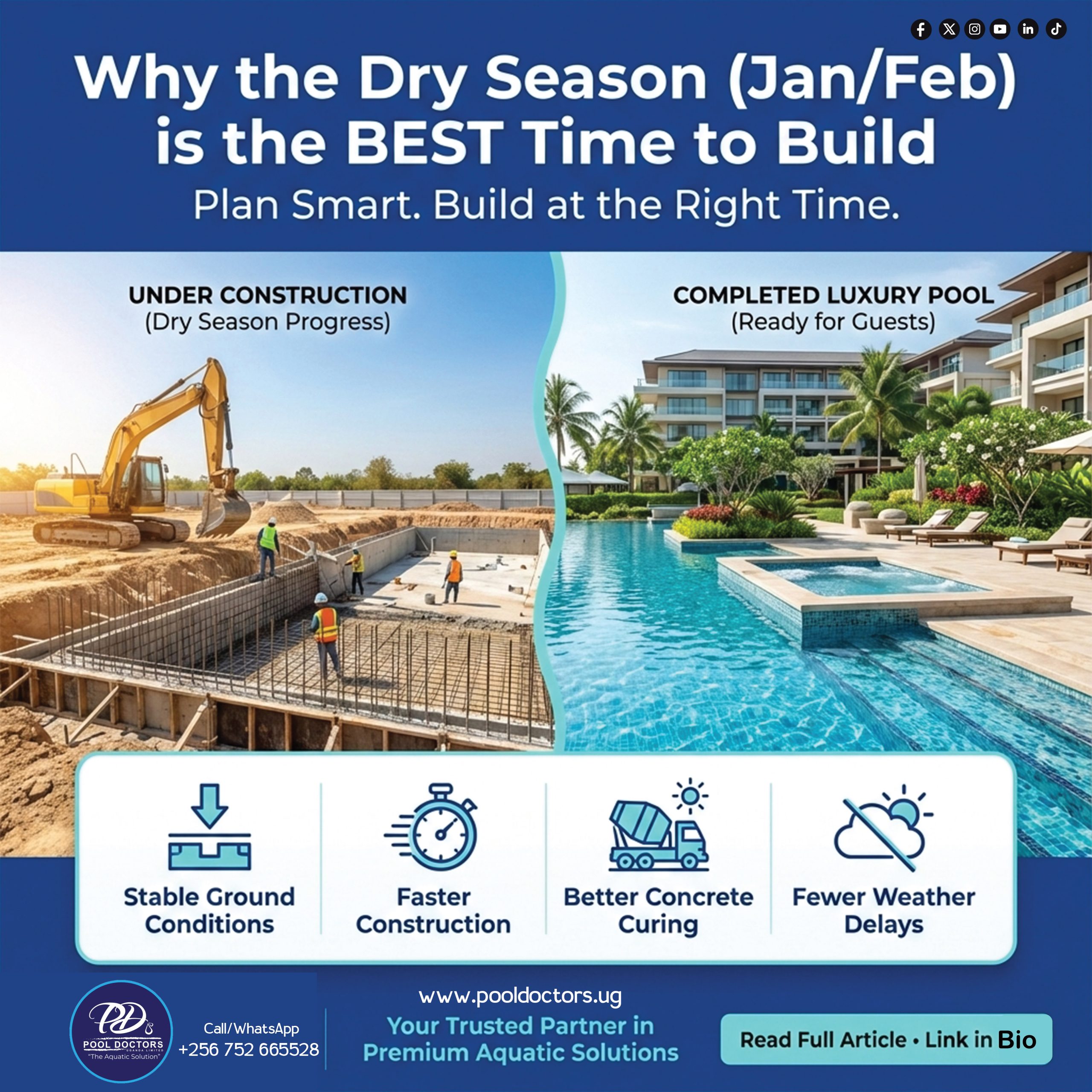
Why the Dry Season (January–February) Is the Best Time to Build

When planning a swimming pool or water feature project, timing is just as important as design and execution. In Uganda, the dry season—particularly January and February—offers the most favorable conditions for construction. For both commercial developments such as hotels and resorts, and high-end residential projects, building during this period results in better quality, faster completion, and fewer disruptions. At Pool Doctors Uganda Ltd, our experience shows that projects started in the dry season consistently deliver superior outcomes. 1. Stable Ground Conditions for Strong Foundations The foundation is the most critical element of any pool construction project. During the dry season, soil conditions are more stable and predictable, reducing the risk of ground movement, soil collapse, or waterlogging during excavation. Dry-season excavation allows for: This is especially important for commercial pools where safety and durability are essential. 2. Faster and More Reliable Construction Timelines Rain is one of the leading causes of construction delays. Wet conditions can halt excavation, disrupt material delivery, and slow down finishing works. January and February provide more predictable weather, allowing construction teams to work efficiently without frequent stoppages. This results in: For hotels and commercial properties, this means opening on schedule and avoiding lost revenue. 3. Better Concrete Curing and Superior Finishes Concrete curing plays a major role in the long-term strength and performance of a swimming pool. Excess moisture from rain can weaken concrete, compromise waterproofing systems, and cause surface defects. Dry-season conditions allow controlled curing, leading to stronger structures and cleaner finishes. 4. Reduced Risk of Water-Related Damage Rainwater can interfere with plumbing installations, electrical systems, and waterproofing layers during construction. Building in the dry season minimizes these risks, ensuring that all components are installed correctly and protected. This significantly reduces future maintenance issues and repair costs. 5. Cost Efficiency and Better Budget Control With fewer delays and disruptions, dry-season construction helps keep projects within budget. Labor and material costs are easier to manage, and there is less wastage caused by weather damage. Starting construction early in the year also allows property owners to plan ahead for peak tourism and business seasons. 6. Ideal Timing for Hotel and Commercial Upgrades For hotels and hospitality businesses, January and February are ideal for upgrading existing pools or adding new water features. Construction can be completed before peak occupancy periods, ensuring minimal disruption to guests. By the time demand increases, facilities are fully operational and ready to deliver an enhanced guest experience. Build Smart. Build at the Right Time. Choosing the right time to build is a strategic decision. The dry season offers technical advantages, financial efficiency, and superior construction quality—making January and February the best time to start your pool or water feature project. At Pool Doctors Uganda Ltd, we guide our clients through every stage of the process, from planning and design to construction and maintenance. Planning a project?📲 Book a site audit today and secure your dry-season build with Pool Doctors Uganda Ltd.
Read more

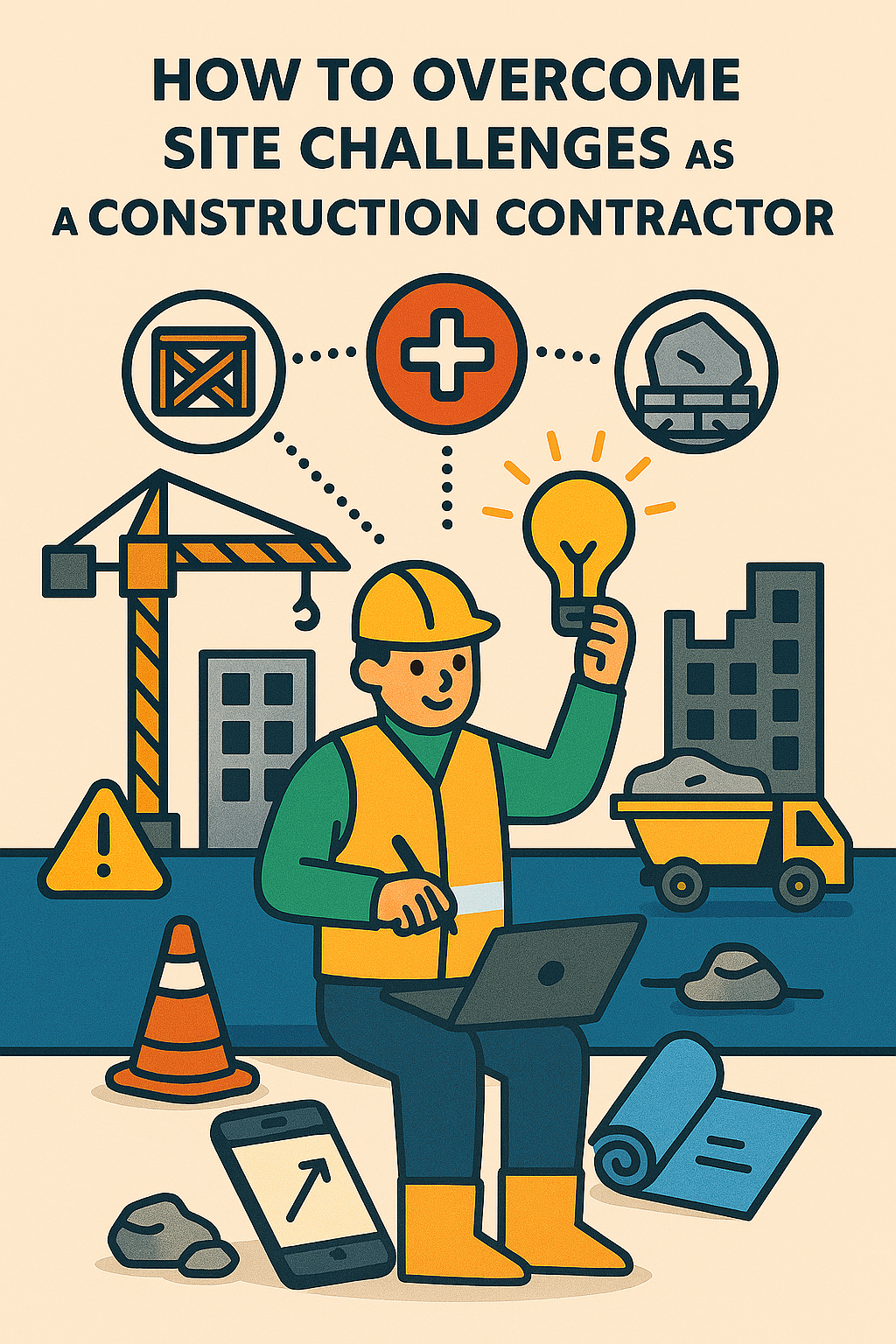
How to overcome site challenges.

  🏗️ Overcoming Site Challenges: A Survival Guide for Construction Contractors In the world of construction, no two sites are ever the same. From unpredictable weather to logistical nightmares, site challenges are part of the job—but they don’t have to derail your project. The most successful contractors aren’t the ones who avoid problems, but those who know how to tackle them head-on with strategy, flexibility, and grit. Here’s how to turn common site challenges into opportunities for growth and efficiency: 🚧 1. Site Access and Logistics The Challenge: Narrow roads, congested urban areas, or remote locations can make transporting materials and equipment a headache. How to Overcome: Pre-site surveys: Conduct thorough access assessments before mobilization. Staggered deliveries: Schedule materials to arrive in phases to avoid congestion. Use local suppliers: Reduce transport time and costs by sourcing nearby. 🌧️ 2. Weather Disruptions The Challenge: Rain, heatwaves, or unexpected storms can halt progress and damage materials. How to Overcome: Build buffer time into schedules: Account for seasonal weather patterns. Protective measures: Use tarps, temporary shelters, and waterproofing techniques. Flexible work plans: Shift indoor tasks forward when outdoor work is delayed. 🛠️ 3. Labor Shortages and Skill Gaps The Challenge: Finding qualified workers can be tough, especially in peak seasons. How to Overcome: Invest in training: Upskill your current team to fill gaps. Partner with trade schools: Create pipelines for fresh talent. Offer competitive incentives: Retain skilled workers with fair pay and benefits. 📋 4. Regulatory and Permit Delays The Challenge: Navigating bureaucracy can slow down even the most well-planned projects. How to Overcome: Early engagement: Start permit applications as soon as the project is greenlit. Stay informed: Keep up with local building codes and zoning laws. Hire a compliance expert: A dedicated professional can streamline approvals. 🧱 5. Material Shortages and Price Fluctuations The Challenge: Global supply chain issues can lead to delays and budget overruns. How to Overcome: Bulk purchasing: Lock in prices early for critical materials. Alternative sourcing: Identify backup suppliers and substitute materials. Transparent communication: Keep clients informed to manage expectations. 🧭 6. Site Safety and Risk Management The Challenge: Accidents and hazards can lead to injuries, lawsuits, and project shutdowns. How to Overcome: Daily safety briefings: Reinforce protocols and encourage vigilance. Regular audits: Identify and fix risks before they escalate. Empower workers: Encourage reporting of unsafe conditions without fear. 🧠 Final Thoughts: Adaptability Is Your Superpower Construction is a dynamic industry. The ability to adapt, communicate, and problem-solve is what separates good contractors from great ones. Challenges will come—but with the right mindset and systems in place, you’ll not only overcome them, you’ll thrive because of them. So next time the site throws you a curveball, take a breath, rally your team, and remember: every challenge is a chance to build better.
Read more

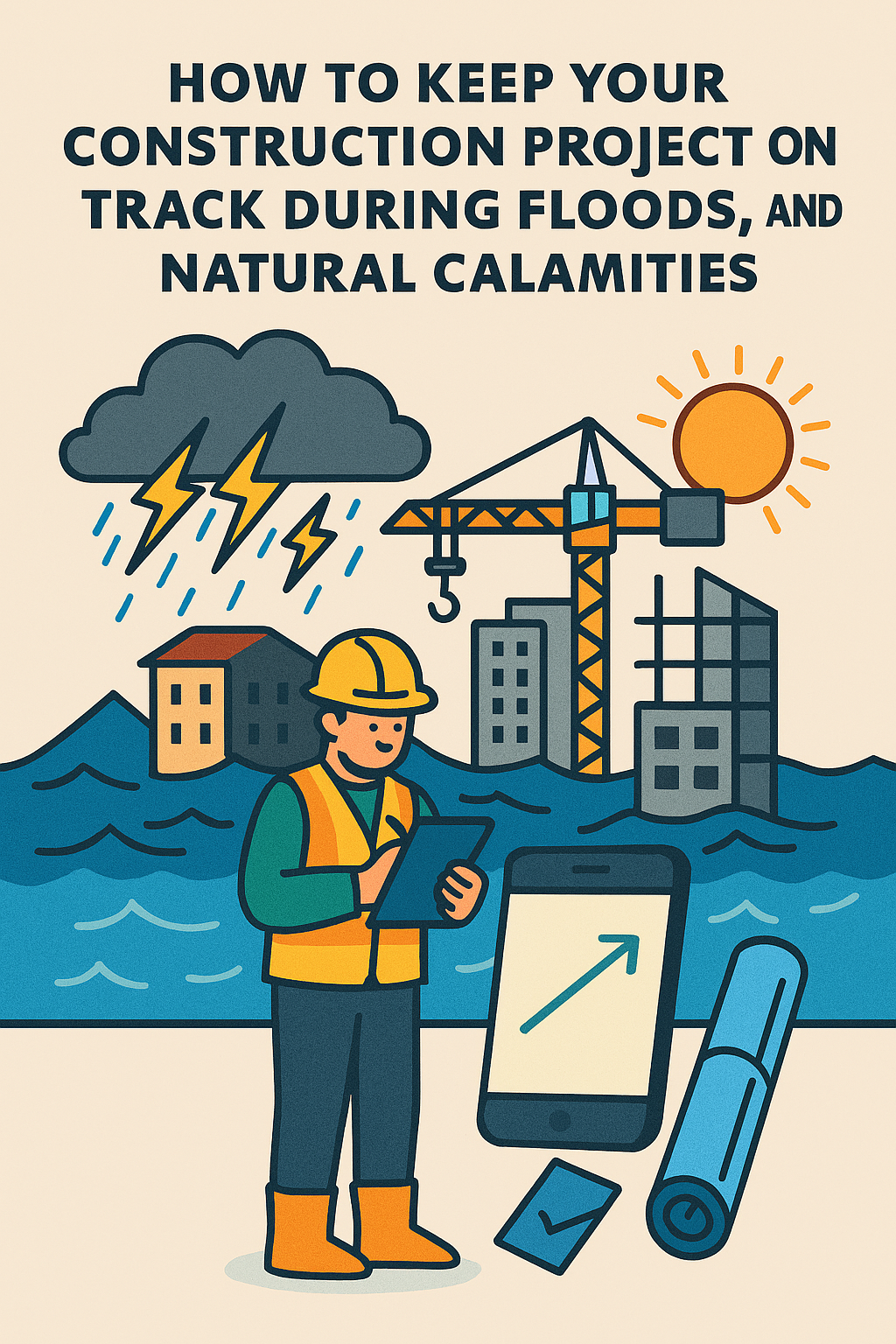
HOW TO KEEP YOUR PROJECT ON TRACK DURING NATURAL CALAMATIES.

🏗️ Staying on Track: Managing Construction Projects During Floods and Natural Calamities In the unpredictable world of construction, few challenges test a project’s resilience like floods and natural disasters. Whether it’s torrential rains, earthquakes, or landslides, these events can derail timelines, inflate costs, and compromise safety. But with the right strategy, your project doesn’t have to grind to a halt. Here’s how seasoned project managers and site engineers keep construction moving—even when nature throws its worst. 🌧️ 1. Risk Assessment and Site Planning Before the first brick is laid, smart teams assess environmental risks. Topographic studies help identify flood-prone zones and unstable terrain. Drainage planning ensures water runoff doesn’t pool around foundations. Weather data analysis informs seasonal scheduling to avoid peak disaster periods. Pro tip: Use GIS mapping tools to visualize risk zones and plan accordingly. 🛠️ 2. Disaster-Resilient Design Building with resilience in mind isn’t just smart—it’s essential. Elevated foundations protect structures from floodwaters. Flexible joints and shock absorbers help buildings withstand seismic activity. Waterproofing materials and sealants reduce long-term damage. Designing for durability means fewer delays and lower repair costs when calamity strikes. 📋 3. Contingency Planning and Budget Buffers Every project should have a Plan B (and C). Emergency response protocols for evacuation and site shutdown. Alternate supplier networks in case of disrupted logistics. Budget contingencies (typically 10–20%) to absorb unexpected costs. Having these in place turns chaos into manageable disruption. 🧑‍🤝‍🧑 4. Communication and Coordination During a crisis, clear communication saves lives and timelines. Daily briefings keep teams updated on weather alerts and safety measures. Stakeholder updates maintain trust and transparency. Real-time collaboration tools (like construction management software) streamline decisions. When everyone’s informed, recovery is faster and smoother. 🚧 5. On-Site Mitigation Measures Sometimes, the storm hits mid-project. Here’s how to respond: Sandbags and temporary barriers to redirect floodwaters. Securing loose materials and machinery to prevent damage or injury. Suspending high-risk activities like crane operations during strong winds. Quick action can prevent a bad situation from becoming catastrophic. 🔄 6. Post-Disaster Recovery and Adaptation Once the skies clear, it’s time to regroup. Damage assessments guide repair priorities. Revised timelines keep stakeholders aligned. Lessons learned sessions improve future preparedness. Resilience isn’t just about surviving—it’s about evolving. 🌍 Final Thoughts Natural calamities are inevitable. But delays, losses, and safety risks don’t have to be. With proactive planning, adaptive design, and strong leadership, construction projects can weather the storm—literally. So the next time the clouds gather, don’t panic. Prepare, pivot, and push forward.  
Read more

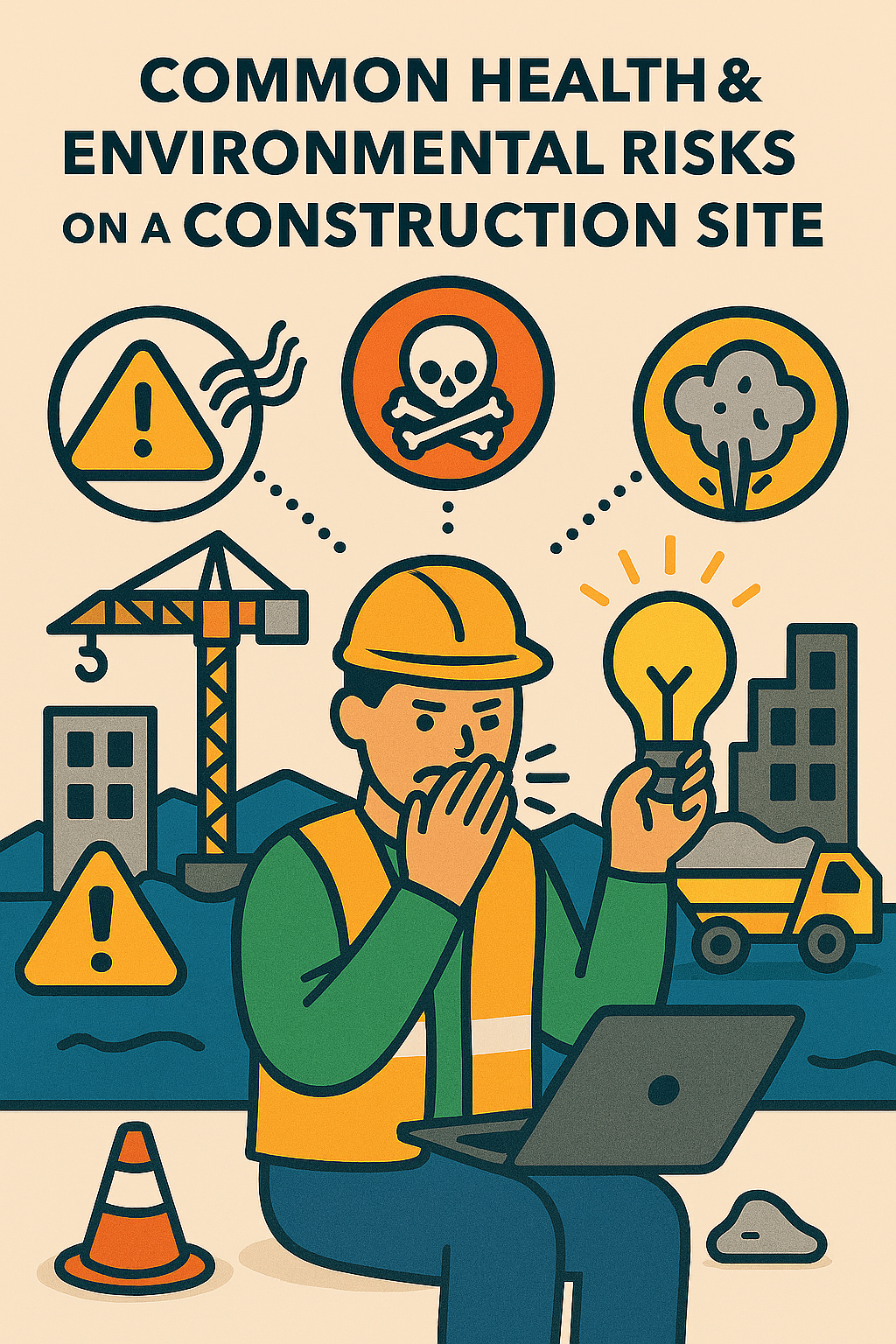
common health environment risks on site.

  🛠️ Common Health & Environmental Risks on Construction Sites — And How to Tackle Them Construction sites are dynamic environments where progress and risk go hand in hand. While the industry builds the future, it also faces serious health and environmental challenges that can impact workers, communities, and ecosystems. Understanding these risks is the first step toward creating safer, more sustainable job sites. Let’s break down the most common threats—and how to manage them effectively. ☣️ 1. Exposure to Hazardous Substances The Risk: Construction workers often come into contact with chemicals like asbestos, silica dust, lead, solvents, and diesel fumes. Long-term exposure can lead to respiratory diseases, skin conditions, and even cancer. Mitigation Strategies: Use PPE (Personal Protective Equipment) like masks and gloves. Train workers on handling hazardous materials. Implement dust suppression techniques and proper ventilation. 🌬️ 2. Air and Noise Pollution The Risk: Heavy machinery, demolition, and welding can release pollutants and generate high noise levels, affecting both workers and nearby residents. Mitigation Strategies: Schedule noisy operations during less disruptive hours. Use sound barriers and low-emission equipment. Monitor air quality and provide hearing protection. 🌡️ 3. Heat Stress and Dehydration The Risk: In hot climates or during peak seasons, prolonged exposure to heat can cause fatigue, heatstroke, and dehydration. Mitigation Strategies: Provide shaded rest areas and hydration stations. Rotate shifts to avoid peak heat hours. Educate workers on recognizing symptoms of heat-related illness. 🦠 4. Poor Sanitation and Hygiene The Risk: Lack of clean water, toilets, and waste disposal can lead to infections, gastrointestinal issues, and disease outbreaks. Mitigation Strategies: Ensure access to clean drinking water and handwashing stations. Maintain hygienic toilets and waste management systems. Conduct regular health and hygiene inspections. 🧱 5. Physical Injuries and Ergonomic Hazards The Risk: Falls, slips, lifting injuries, and repetitive strain are common on construction sites. Mitigation Strategies: Enforce safety protocols and fall protection systems. Train workers in proper lifting techniques. Design tasks to reduce repetitive motion and awkward postures. 🌍 6. Environmental Degradation The Risk: Construction activities can lead to soil erosion, water contamination, and habitat destruction. Mitigation Strategies: Implement erosion control measures like silt fences and vegetation buffers. Properly store and dispose of chemicals and waste. Conduct environmental impact assessments before breaking ground. 🧠 Final Thoughts: Safety Is a Culture, Not a Checklist Health and environmental risks on construction sites are real—but they’re manageable with the right mindset. Building a culture of safety means going beyond compliance. It’s about empowering workers, protecting communities, and respecting the environment. Every brick laid should be a step toward a healthier, safer future.  
Read more
Shopping Cart (0 items)