

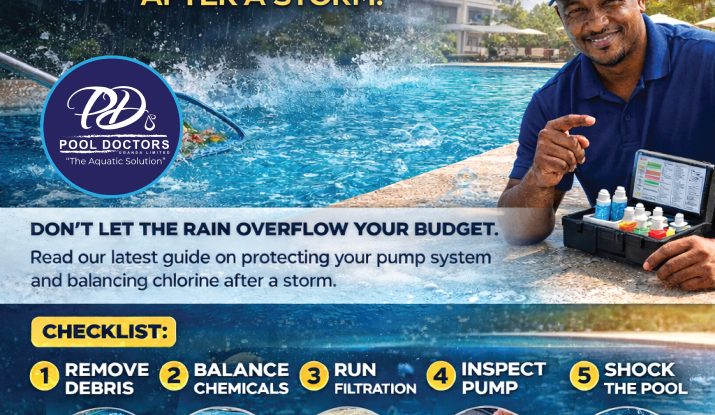
Heavy rainstorms are common across Uganda, especially in urban areas such as Kampala where sudden downpours can quickly affect swimming pool water quality.
While rainwater itself is clean, it dilutes pool chemicals, introduces debris, and disrupts water balance. If corrective action is not taken promptly, pool owners may experience cloudy water, algae growth, unsafe swimming conditions, and potential equipment damage.
Understanding the correct maintenance steps after a storm helps protect your investment and ensures that your pool remains clean, safe, and functional.
Below are five essential pool maintenance actions every Ugandan pool owner should take after heavy rain.
Why Rain Affects Swimming Pools
Rainfall changes the chemical balance of a pool in several ways:
- Dilution of chlorine levels
- Changes in pH balance
- Introduction of debris and organic material
- Contamination from runoff and dust
These changes can lead to bacterial growth, algae formation, and cloudy water, making the pool unsafe for swimmers if not addressed quickly.
1. Remove Debris Immediately
Storms often leave leaves, insects, dust, and other organic materials floating on the surface of the pool.
If debris remains in the water, it begins to decompose and consume chlorine, which is responsible for sanitizing the pool.
What to Do
- Use a skimmer net to remove floating debris.
- Empty the skimmer basket.
- Brush the pool walls and corners where debris collects.
Removing debris quickly prevents contamination and reduces strain on the filtration system.
2. Test and Rebalance Pool Chemicals
Rainwater dilutes important chemical levels in a swimming pool. Without proper balance, the water may become unsafe or uncomfortable for swimmers.
Important levels to check include:
| Chemical Level | Ideal Range |
|---|---|
| pH | 7.2 – 7.6 |
| Chlorine | 1 – 3 ppm |
| Total Alkalinity | 80 – 120 ppm |
What to Do
Use a professional pool testing kit to check chemical levels and gradually rebalance the water with appropriate chemicals.
Maintaining proper chemical balance prevents algae growth and protects pool surfaces and equipment.
3. Run the Pump and Filtration System
Rainwater introduces microscopic particles that may not be immediately visible. These particles cause water to appear cloudy or dull.
Your pool pump and filtration system help remove these contaminants.
Recommended Action
After a storm:
- Run the pump for 8–12 hours
- Ensure water circulation is consistent
- Monitor water clarity
Proper filtration helps restore water quality faster and distributes chemicals evenly.
4. Inspect the Pump and Pool Equipment
Storm debris can clog filtration systems and affect pump performance. Ignoring equipment inspection may lead to reduced circulation or mechanical failure.
Key Areas to Inspect
- Pump basket
- Filter pressure levels
- Water return jets
- Pool skimmer
If the filter pressure increases significantly, it may be necessary to clean or backwash the filter system.
Routine inspections help extend the lifespan of pool equipment.
5. Shock the Pool if Necessary
If the pool water becomes cloudy, discolored, or contaminated, a chlorine shock treatment may be required.
Shocking the pool involves adding a higher concentration of chlorine to eliminate bacteria, algae spores, and organic contaminants.
When to Shock a Pool
- After heavy storms
- When water becomes cloudy
- When chlorine levels drop significantly
- When algae begins to appear
Shock treatments are most effective when performed in the evening, followed by several hours of filtration.
Common Mistakes Pool Owners Make After Heavy Rain
Many pool owners unintentionally make mistakes that worsen water conditions after a storm.
Common errors include:
- Ignoring debris in the pool
- Swimming before chemical levels are restored
- Turning off the filtration system too early
- Adding excessive chemicals without testing the water
Proper testing and gradual adjustments are essential for maintaining safe pool water.
When to Call a Professional Pool Technician
Maintaining correct pool chemistry requires experience and proper testing equipment. If the water remains cloudy or chemical levels become difficult to balance, professional assistance may be required.
Pool Doctors Uganda Limited provides professional swimming pool maintenance services for residential properties, hotels, and commercial facilities in Kampala and surrounding areas.
Our trained technicians assist with:
- Water testing and chemical balancing
- Pump and filtration maintenance
- Algae treatment and recovery
- Preventive maintenance programs
- Equipment inspections and repairs
Regular maintenance ensures that pools remain clean, safe, and operational throughout the year, regardless of weather conditions.
Frequently Asked Questions
Does rain affect chlorine levels in a swimming pool?
Yes. Rainwater dilutes chlorine levels, which can reduce the pool’s ability to sanitize water and prevent bacteria growth.
Should I shock my pool after heavy rain?
In many cases, yes. If debris enters the pool or the water becomes cloudy, a chlorine shock treatment helps restore sanitation and clarity.
How long should I run the pump after a storm?
Most pools require 8–12 hours of filtration after heavy rain to circulate chemicals and remove contaminants.
Can rain cause algae growth in pools?
Yes. When chlorine levels drop after rain, algae can begin to grow quickly if the water is not properly balanced.
Protect Your Pool Investment
Swimming pools require consistent maintenance, particularly after heavy rainfall. By removing debris, balancing chemicals, and ensuring proper filtration, pool owners can prevent costly repairs and maintain safe swimming conditions.
If you need professional assistance maintaining your swimming pool, Pool Doctors Uganda Limited provides expert pool care services designed to keep your pool in excellent condition year-round.
Contact our team today to learn more about scheduled pool maintenance services in Kampala.